August 3rd, 2010 by biotic earth blogger

In a short new video, Dr. Ken Podlubny of Clearflow Enviro Systems Group provides a strong example of how hydraulic growth mediums (HGMs) can be applied quickly and effectively when matching the right tackifier and any additional erosion control or vegetation-promoting measures to a site’s situation.
The video’s slope stabilization and seeding project (shot during work at Commonwealth Stadium) has utilized Biotic Earth Black™ for its growth medium.
Clearflow’s system on site uses environmentally friendly anionic polyacrylamides in the tackifier, which is what provides the necessary bond between the HGM and the soil being enriched and protected by the HGM.
Dr. Podlubny shows how water that flows out of the system during the dynamic application is clean and clear.
The project has also used a soft armor (jute matting) to help with slope control ahead of the vegetation establishment. The soft armor traps the hydraulic mulch and holds it against the hill, creating what Dr. Podlubny calls “an intimate relationship between the jute, the [Biotic Earth] Black, the soil and the tackifier.”
See the application video now.
Tags: biotic earth, biotic earth black, biotic earth products, bonded fibre matrix, Clearflow Enviro Systems Group, dirt tackifiers, EarthBound, EarthChem, erosion control, erosioncontrolblanket.com, fibre reinforced matrix, flexible growth medium, hydraulic growth mediums, hydro mulch companies, hydro mulch company, hydromulch, hydromulch company, hydromulching company, Hydroseeding, hydroseeding companies, hydroseeding company, hydroseeding tackifiers, IECA, International Erosion Control Association, jute geotextiles, jute matting, landfill caps, mine reclamation, mine reclamation projects, mining caps, mulch, Polymers, soil tackifiers, verdyol, verdyol biotic earth, verdyol growth mediums, wastewater lagoon projects, wastewater lagoons, webinars, www.bioticearth.com
Posted in Hydroseeding | No Comments »
July 9th, 2010 by biotic earth blogger

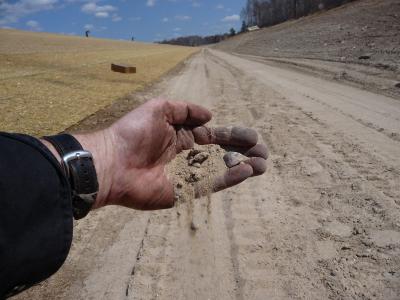
Sand/gravel soils often lack proper organics to promote vegetation.
The Manitoba Floodway expansion is one of the largest earth moving projects in Canada. With over 30 million cubic meters of soil excavated over the channel’s 40 km, the project encountered many unique challenges in terms of vegetation establishment.
A 2-km stretch of the floodway near Hwy #59 exemplifies the types of vegetation challenges. The gravel/clay deposit that characterizes the area’s soils has little to no topsoil or organics. This till material is highly erodible. Traditional seeding methods have not work in this area.
THE IMPORTANCE OF ORGANICS

Manitoba Floodway Authority personnel heard of how a mix of an organic-rich HGM and erosion control blankets worked at a similarly challenged site in the province.
The Manitoba Floodway Authority considered importing topsoil to cover this area. Doing so would establish a viable growing base to start the establishment of vegetation and to stop erosion of the slopes. But hauling in significant quantities of quality topsoil is expensive. Then the Authority heard of the success of the Milner Ridge wastewater project conducted with Manitoba Infrastructure and Transportation.
At Milner Ridge, the facility’s structural integrity was threatened by erosion of the ancient, glacial sand deposit on which it rests. That soil was not well-suited to promoting vegetation. The facility’s operators needed to secure 70,000 m² of slopes and channels. They chose a mix of Verdyol Biotic Earth™ Black hydraulic growth medium and, where needed, a mix of single-net (S31) and double-net (S32) straw blankets from ErosionControlBlanket.com.
The two-pronged approach employed at Milner Ridge not only provided immediate erosion control for the site, but improved the subsoil and promoted fast, sustainable vegetation.

The HGM selected for the project introduced organics and stimulated microbial activity necessary in creating quality, vegetation-sustaining topsoil.
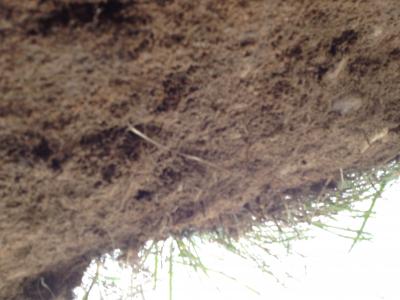
How it works is the hydraulic growth mediums (HGMs) improve soil tilth through the introduction of organics and microbial stimulating materials into the soil. They build soil structure or stimulate soil aggregate formation and, thus, improve on existing soil characteristics or build a topsoil layer from sub-soils while still offering the exceptional erosion control characteristics of strong vegetation.
Bill Barnes, an assistant contract administrator with the Manitoba Floodway Authority, opted for a a trial application of the Biotic Earth™ Black system on a 1 Ha area.
TRIAL & SUCCESS

Double-sideed straw blankets were installed on top of the HGM system for added protection during vegetation establishment.
Mid-Canada Hydroseeding applied the Biotic Earth™ Black HGM at a rate of 3933kg/Ha and seed at 175kg/ha. Water and fertilizer was applied with their hydroseeding equipment and, afterwards, S32 double-sided straw blanket from ErosionControlBlanket.com were installed.
The application was conducted in October 2009.
After a long, cold winter and an exceptionally rainy spring, the trial’s results proved to be very satisfying for the Floodway Authority.
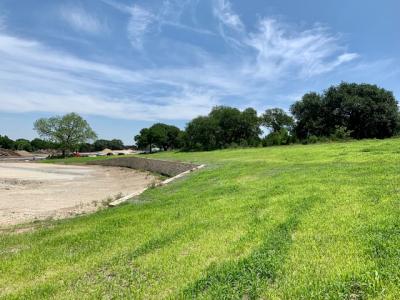
As of July 2010, the area is vegetating well and very little erosion has occurred on the site. The combination of the S32 Erosion Control Blanket along with the growing medium of the Verdyol Biotic Earth Black has provided to be the right protection and the correct amount of organics and soil amendments to get the vegetation established.
Bill Barnes has stated that he will use this system on other areas of the floodway project where growing issues are present.

The site is thriving in its first summer, very much as Milner Ridge did.
Tags: biotic earth, biotic earth black, biotic earth products, bonded fibre matrix, dirt tackifiers, EarthBound, EarthChem, erosion control, erosioncontrolblanket.com, fibre reinforced matrix, flexible growth medium, hydraulic growth mediums, hydro mulch companies, hydro mulch company, hydromulch company, hydromulching company, Hydroseeding, hydroseeding companies, hydroseeding company, hydroseeding tackifiers, hyroseeders, IECA, International Erosion Control Association, landfill caps, landfill or mining caps, mine reclamation, mine reclamation projects, mining caps, mulch, soil tackifiers, verdyol, verdyol biotic earth, verdyol growth mediums, wastewater lagoon projects, wastewater lagoons, webinars, www.bioticearth.com
Posted in Hydroseeding | No Comments »
July 2nd, 2010 by biotic earth blogger
Not long ago, we posted a one-year-later update from a Biotic Earth project at a critical waterwater facility rehabilitation. And while the one-year results are exemplary, it’s important to know that hydraulic growth medium (HGM) installations go back further and continue to produce fantastic results.
In 2004, the large energy generation company, Hydro-Québec, wanted to combine peat moss with its wheat-based straw mulch to help reclaim road sides that were being built on their northern construction sites near James Bay.
This project was located in the Northern Boreal forest where salvaging topsoil was impossible. Importing topsoil to this area was not possible. To further complicate matters, the subsoil was highly erodible sand and their growing season extremely short. Vegetation needed to be established within one season to make it sustainable without the use of topsoil.

To accommodate this requirement, a Verdyol Biotic Earth™ HGM was applied at a rate of 2000kg/ha—a decent speed of application and one that perhaps helps underscore the time savings realized on sites that utilize hydraulic application of erosion controlling, soil-improving growth mediums. A great deal of space can be covered quickly and effectively.
Another attractive feature of these HGM applications is that a good operator can incorporate a smart seed mix to get the variety of plantings many project teams prefer. The seed mix established with Hydro-Québec consisted of:
34% Creeping red fescue
8% Timothy
5% Bent Grass
20% Birdsfoot trefoil
15% White Clover
15% Barley
3% Reed Canary grass
That mix was applied at a rate of 175 kg/ha. It was also a key element to working with this company, which has a very good reputation for renewable energy production. Environmental responsibility is part of its corporate identity. As such, coming up with a seed mix that met the company’s goal of “re-naturalization” of the land and incorporating the right tackifier to hold this HGM system intact and allow the soil amendment and vegetation to develop was extremely important.

Additionally, a 12-18-12 fertilizer was used and 25% of this fertilizer was slow release. The tackifier was applied at a rate of 80 L/ha on the steeper slopes to firm up those sections and make sure they would not lose cohesion during storms that might come prior to full vegetation.
Grass grew within the first season and within the second season the birdsfoot trefoil bloomed. This is the typical pattern with Verdyol Biotic Earth HGM systems: strong, thick-rooted grasses at the outset that get the site into and through first winter, followed by more advanced growth of additional vegetation in the next season.

More than six years later, this site continues to function well and Hydro-Québec still specifies in its northern areas a straw-and-peat mix as developed for this project.


Tags: biotic earth, biotic earth black, biotic earth products, bonded fibre matrix, dirt tackifiers, EarthBound, EarthChem, erosion control, erosioncontrolblanket.com, fibre reinforced matrix, flexible growth medium, hydraulic growth mediums, hydro mulch companies, hydro mulch company, hydromulch company, hydromulching company, Hydroseeding, hydroseeding companies, hydroseeding company, hydroseeding tackifiers, hyroseeders, IECA, International Erosion Control Association, mulch, soil tackifiers, verdyol, verdyol biotic earth, verdyol growth mediums, webinars, www.bioticearth.com
Posted in Hydroseeding | No Comments »
June 21st, 2010 by biotic earth blogger
While hydraulic growth mediums have been shown to be magnificently effective in spurring the growth of strong, long-term vegetation, few of these advanced formulas would succeed without the inclusion of tackifiers.
Tackifiers are specially engineered to create a bond in the hydraulic growth medium. Without them, all the time spent creating the biotic-rich growth medium might go to waste as storm events could wash the growth medium away before vegetation establishes itself. Tackifiers strengthen the hydraulic growth medium, providing the time needed for vegetation to flourish and real long-term erosion control to be created.
Tackifiers are made from a number of sources, but the technical nature behind their develop truly sets some producers apart. EarthBound® 2000 Soil Stabilizer & Tackifier*, for example, is formulated from both long chain and cross-linking molecules in conjunction with a hydrocolloid vegetable gum-based tackifier. It provides effective soil structure stabilization and water infiltration. Most importantly, it adheres mulch to the soil surface.
EarthBound 2000 Soil Stabilizer & Tackifier is engineered for mild to moderate slopes.
Even tougher formulas are available. EarthBound® Scientific Soil Stabilizer & Tackifier is engineered for effective erosion control, mulch and soil stabilization for moderate to extreme slope gradients and extremely erosive conditions.
You can find these tackifiers and Ver-Tack Hydroseeding Tackifier utilized by Verdyol Hydraulic Growth Mediums.
Hydraulically applied growth mediums are very economical, but the science behind them is complex. The choice of tackifier plays a huge role here. And whether you’re a hydroseeding contractor or the client benefitting from all of the science, you can be sure that when you use a Verdyol Hydraulic Growth Medium you’re getting a strong, well-engineered system.
Learn more at BioticEarth.com.
(NOTE: EarthBound® is a registered trademark of EarthChem, Inc.)
Tags: biotic earth, biotic earth black, biotic earth products, bonded fibre matrix, dirt tackifiers, EarthBound, EarthChem, erosion control, erosioncontrolblanket.com, fibre reinforced matrix, flexible growth medium, hydraulic growth mediums, hydro mulch companies, hydro mulch company, hydromulch company, hydromulching company, Hydroseeding, hydroseeding companies, hydroseeding company, hydroseeding tackifiers, hyroseeders, IECA, International Erosion Control Association, mulch, soil tackifiers, verdyol, verdyol biotic earth, verdyol growth mediums, webinars, www.bioticearth.com
Posted in Hydroseeding | No Comments »
June 2nd, 2010 by biotic earth blogger
Internet-based education comes in many forms. Significant improvements over the last five years in online speeds has been particularly helpful in extending two major sources of education and communication:
- Online webinars
- Video education
In the erosion control field, one of the great sources for online webinar education—both live and recorded sessions—is through the International Erosion Control Association (IECA). An example of this is the June 25 webinar event “Construction Inspection Techniques That Really Work.”
Jennifer Hildebrand, CPESC, CPSWQ, CESSWI, CISEC, will lead this webinar, which will look at inspection programs and focus on both the perspective of the inspector for a regulatory agency and the inspector who may be inspecting his own sites. Participation is worth 1 PDH.
But not everyone has time for a full webinar. In these cases, easy access to video demonstrations of products and techniques are of great help. Individual companies are important providers of these quick bites of erosion control information.
On BioticEarth.com, for example, a five-video series is available for both specifiers and contractors. Visit the BioticEarth home page for more information on how these types of products are not only extremely effective means of erosion control and vegetation establishment but economically smart for erosion control businesses and clients alike.
Tags: biotic earth, biotic earth black, biotic earth products, bonded fibre matrix, dirt tackifiers, EC11, erosion control, erosioncontrolblanket.com, fibre reinforced matrix, flexible growth medium, hydraulic growth mediums, hydro mulch companies, hydro mulch company, hydromulch company, hydromulching company, Hydroseeding, hydroseeding companies, hydroseeding company, hydroseeding tackifiers, hyroseeders, IECA, International Erosion Control Association, mulch, soil tackifiers, verdyol, verdyol biotic earth, verdyol growth mediums, webinars, www.bioticearth.com
Posted in Hydroseeding | No Comments »
May 26th, 2010 by biotic earth blogger
For those still interested in submitting an abstract to the International Erosion Control Association’s (IECA) Environmental Connection (EC11) event, the deadline is today, May 26 at 12:00 pm (Mountain).
The event, to be held 20-23 February 2011 in Orlando, Florida is the annual conference and expo of IECA. Combining quality education with a world-class expo, EC11 is the premier gathering place for the erosion and sediment control community, drawing attendees from over 20 countries and 150 exhibitors.
Use the online form to submit your abstract.
Tags: biotic earth, biotic earth black, biotic earth products, bonded fibre matrix, EC11, Environmental Connection, erosioncontrolblanket.com, fibre reinforced matrix, flexible growth medium, hydraulic mulch, hydro mulch companies, hydro mulch company, hydromulching, hydromulching company, hydroseeding companies, hydroseeding company, hydroseeding tackifiers, hyroseeders, IECA, International Erosion Control Association, mulch, soil tackifiers, vegetation, verdyol biotic earth, verdyol growth mediums
Posted in Hydroseeding | 1 Comment »
May 18th, 2010 by biotic earth blogger

Before and after: a harsh winter may have stripped the vegetation of its green look, but not of its strength and hold on the site. A season of green, strong erosion control is right on track.
Well, another winter has come and gone at Milner Ridge, a wastewater facility in Manitoba that has utilized both blankets and hydromulch in defending against erosion that could induce facility failure. The structural integrity of Milner Ridge was threatened by erosion of the ancient, glacial sand deposit on which it rests. The facility’s operators needed to secure 70,000 m² of slopes and channels. They chose a mix of Verdyol Biotic Black Earth™ hydraulic growth medium and single-net (S31) and double-net (S32) straw blankets from ErosionControlBlanket.com.
The two-pronged approach employed at Milner Ridge not only provided immediate erosion control for the site, but improved the subsoil and promoted fast, sustainable vegetation.
I visited the site recently to inspect it and observe how it survived Manitoba’s harsh winter and the spring thaw.
PHOTOS
Spring 2010
The following pictures show how well the site is fairing. The verdant green that characterized the site last summer and fall may be temporarily absent, as the area recovers from a hard winter, but the vegetation is still strong and shows every indication of continuing its outstanding performance.

South side of lagoons. The grass is just now greening up after the winter season. This is typical of spring in Manitoba for May 12.

At the front entrance, you can still see the distinct line of vegetation and sparse vegetation where blanket was and was not used as additional erosion control cover. The S31 Blanket does make a difference in holding moisture and biotics in place.

The Birdsfoot Trefoil is really starting to take off, which is a great thing as these legumes will fix nitrogen and help to feed the site in the long term. Yellow and white flowers should bloom in a couple of months.

A typical spring green up in Manitoba. The old thatch is a great mulch and will now replace the degrading S31 and S32 on the slopes and further help with establishing the soil layer while assisting in erosion control.

Cell #1: Nice, thick vegetation going green.

The shoreline rock received some Biotic and seed from overspray (not intentionally). In these areas, the vegetation has established nicely and is doing well. This area is protected from erosion by the rock and in a good moisture zone along the pond. The green grass in the rock area, I suspect, is from the warming effect of the rock. We have had hot days and the rocks will stay warm longer while heating the surrounding soil. It's helping grass grow.

The west side has filled in great and the green up is coming along well. It's somewhat hard to tell in this picture, but it's growing quite well.

The greening of the site is consistent throughout all treated zones. Areas that were weak last year are filling in now. There is not any evidence of erosion after a year's full cycle of seasons.

East side, Cell #1: Clover and trefoil are taking off.

Evident again in this picture, the blanket has really made a difference in the success of the vegetation. The biotics helped, but you can really see the defining line in the vegetation where the blanket was and was not used.

Outfall of lagoon Cell #3. The rock that was placed to prevent erosion was piled too high. This is a typical installation mistake, and the effect is that water runs down the side of the rock and potentially erodes the slope. Solution? A highly durable, turf reinforcement mat (TRM) like the P42 (from ErosionControlBlanket.com) placed in a shallow channel will resist this sort of erosion and reduce the possibility of installation error. When fully vegetated, P42 can resist erosion equal to 30-inch rock.

The vegetation is greenest by rocks, due to the heat retention and available moisture.
The erosion during the winter and the spring melt was minimal to none throughout the site. The vegetation greening up and I expect it to thrive this year. The legumes were progressing nicely, and that is great to see. As is evident, the Biotic Earth Hydraulic Growth Mediums have done an effective job of providing the initial growth medium to kick-start this site. In some cases, the S31 straw blankets have provided additional mulching and erosion control in really tough areas.
Overall, the structure is secure and the erosion control system is performing exemplary.
For more information on this project, the Biotic Earth product lines and more, contact:
Mark Myrowich, CPESC
Verdyol Biotic Earth
www.bioticearth.com
Tags: biotic earth, biotic earth black, biotic earth products, erosion control, erosioncontrolblanket.com, flexible growth medium, hydraulic growth mediums, hydraulic mulch, hydro mulch companies, hydro mulch company, hydromulch, hydromulch company, hydromulching, hydromulching company, Hydroseeding, hydroseeding companies, hydroseeding company, hydroseeding tackifiers, hyroseeders, Manitoba, Milner Ridge, mulch, sediment control, vegetation, verdyol, verdyol biotic earth, verdyol growth mediums, www.bioticearth.com
Posted in Hydroseeding | No Comments »
April 16th, 2010 by Biotic Earth
The IAHP was created to educate, promote and aid the hydro seeding industry. So far, we think they’ve done a phenomenal job of being current, up to date, and connected. To learn more about the IAHP, visit their hydroseeding website.
Tags: biotic earth, biotic earth black, biotic earth products, bonded fibre matrix, dirt tackifiers, fibre reinforced matrix, flexible growth medium, hydraulic growth mediums, hydraulic mulch, hydro mulch companies, hydro mulch company, hydromulch, hydromulch company, hydromulching, hydromulching company, Hydroseeding, hydroseeding companies, hydroseeding company, hydroseeding tackifiers, hyroseeders, mulch, soil tackifiers, tricontonal growth stimulant, verdyol, verdyol biotic earth, verdyol growth mediums, www.bioticearth.com
Posted in Hydroseeding | No Comments »
April 14th, 2010 by Biotic Earth
Here we will blog about all things hydroseeding! Get ready to look at it in a very different way…
Tags: biotic earth, biotic earth black, biotic earth products, bonded fibre matrix, dirt tackifiers, fibre reinforced matrix, flexible growth medium, hydraulic growth mediums, hydraulic mulch, hydro mulch companies, hydro mulch company, hydromulch, hydromulch company, hydromulching, hydromulching company, Hydroseeding, hydroseeding companies, hydroseeding company, hydroseeding tackifiers, hyroseeders, mulch, soil tackifiers, tricontonal growth stimulant, verdyol, verdyol biotic earth, verdyol growth mediums, www.bioticearth.com
Posted in Hydroseeding | No Comments »